

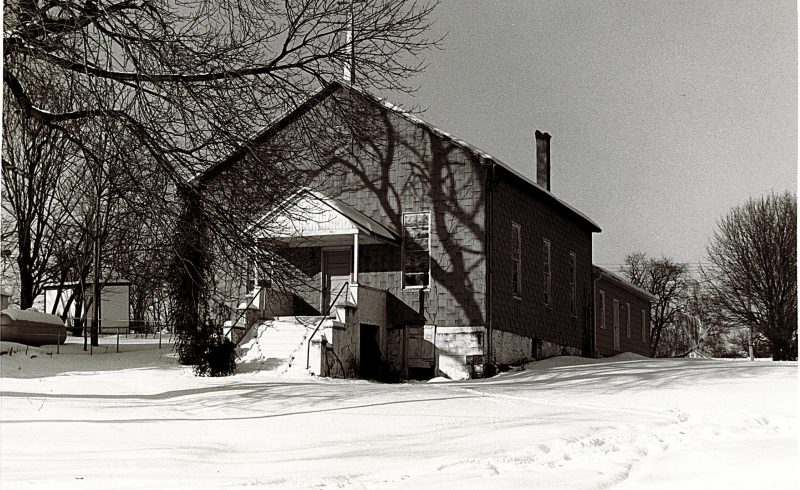
Choir rehearsals, Christmas plays, Easter specials, vacation Bible school, ladies tea parties, repasts after funerals—John Wesley United Methodist Church was alive with activity in the 1950s and 60s. Cousins Ann Reeler, Rhonda Reeler Smith, and Sharon Spriggs say they spent countless hours there during their youth in 1960s and early 70s.
They have many fond memories of John Wesley Church as a family-oriented gathering place with lots of laughing children and frequent lawn parties. Annual bus trips organized by Gladys Garrett transported families to places like Hersheypark in Pennsylvania and the Glen Echo Amusement Park in Maryland for affordable fun. Maggie Clinton was the Sunday school superintendent, and Ann’s father, Oscar, directed the choir with a strong tenor voice. Sharon’s mother, Inez, was one of the church pianists, along with Betty Taylor. Rhonda lived in the lot behind the church. Her father Calvin was Oscar’s brother, and her mother Ruby was a beloved local teacher.
Even though the congregation merged with Camp Hill Methodist in 1977, the cousins can still rattle off the names of families they worshipped with at John Wesley: Dennis, Briscoe, Weaver, Twyman, Green, Snowden, Hall, Goens, Fox, Nunn, Taylor, Arter, and Kent, to name a few.
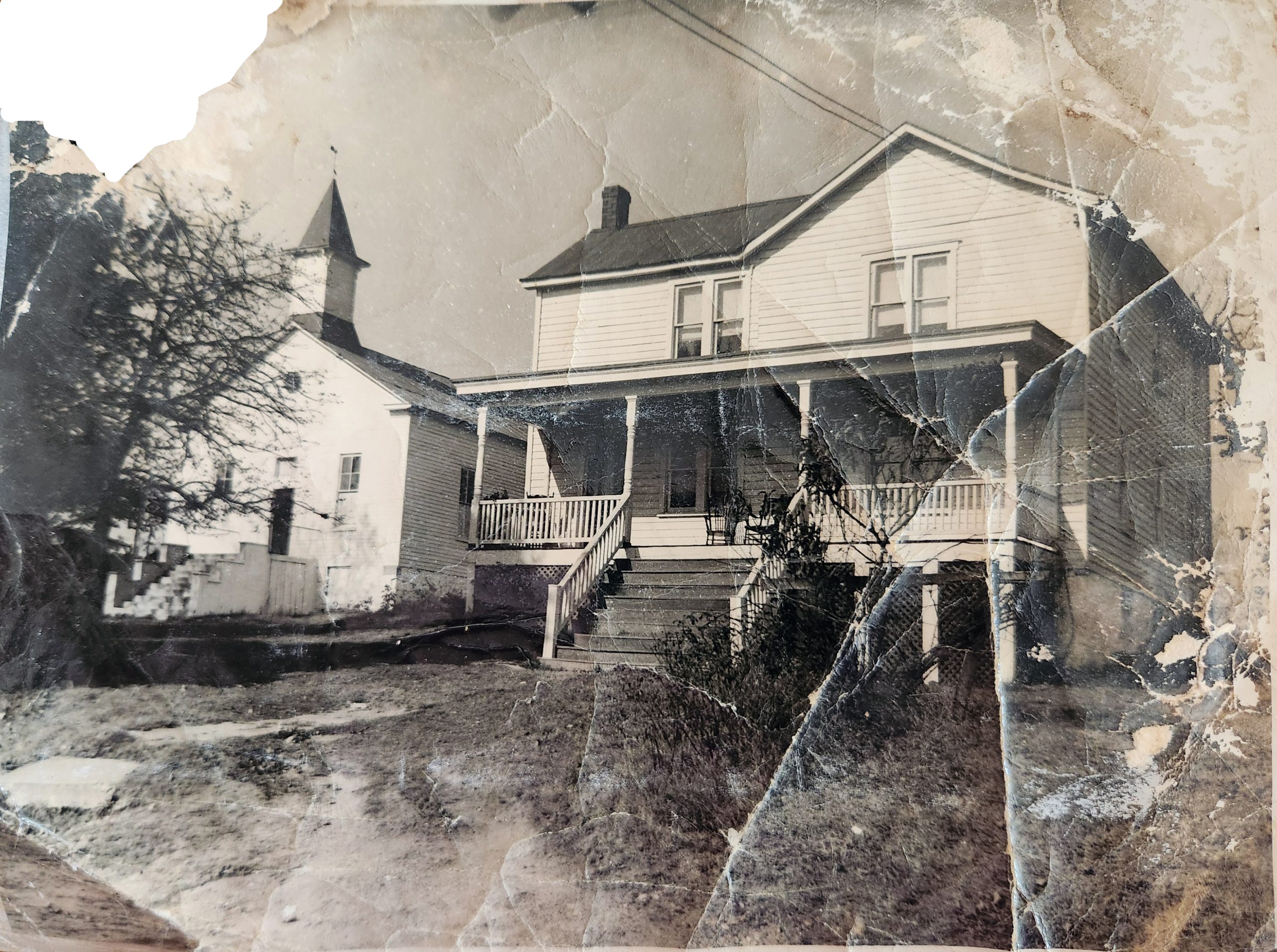 Early photo of John Wesley Church and its parsonage (Courtesy Ann Reeler)
Originally known as the Methodist Episcopal Church, it was the first known Black congregation in Harpers Ferry. Its earliest members were here as early as 1863. The first named members we know of were the church trustees who purchased a lot on Fillmore Street at the 1869 auction of federal lands: Isaac Gilbert (possibly the same man formerly enslaved by Harpers Ferry’s Mayor Fontaine Beckham), Thomas Jefferson, Henry Johnson, Harrison Robinson, and James Warfield.
For several years they met in the Storer College building for worship. Then, in 1879 the congregation purchased a lot on West Ridge Street and laid the cornerstone for its very own church. The following year they sold the Fillmore Street property to Storer. Construction finally proceeded in earnest in 1880 under the pastorship of Rev. Patrick H. Ryan.
The congregation bought adjacent lots in 1888, including space for a parsonage next door. Trustees at this time were William A. Arter, William Moody, Thomas Jefferson, J. A. Arter, and J. E. Robertson. They called themselves the Colored Methodist-Episcopal Church of Bolivar and Harpers Ferry.
The church continued to grow, but for most years it was too small to support a full-time minister. It was included in “circuit” of two or more regional churches, which varied in size over the years. In the early 20th century, the Harpers Ferry church had the only parsonage on its circuit, which attracted circuit ministers to live here. In 1909 Rev. Thomas B. Snowden was appointed to the circuit. That year, the trustees were named as Charles Reeler, Robert Jackson, George W. McDaniel, Albert Mason, Harry Williams, Robert McDaniel, and James O. Warren. When Snowden left for a new ministerial appointment in 1911, he left his 9-year-old son John in the care of Joseph Eackles (a white man and founder of Eackles Funeral Home). John continued his schooling at Storer College and then settled in as a Bolivar resident and raised his family as members of John Wesley Church.
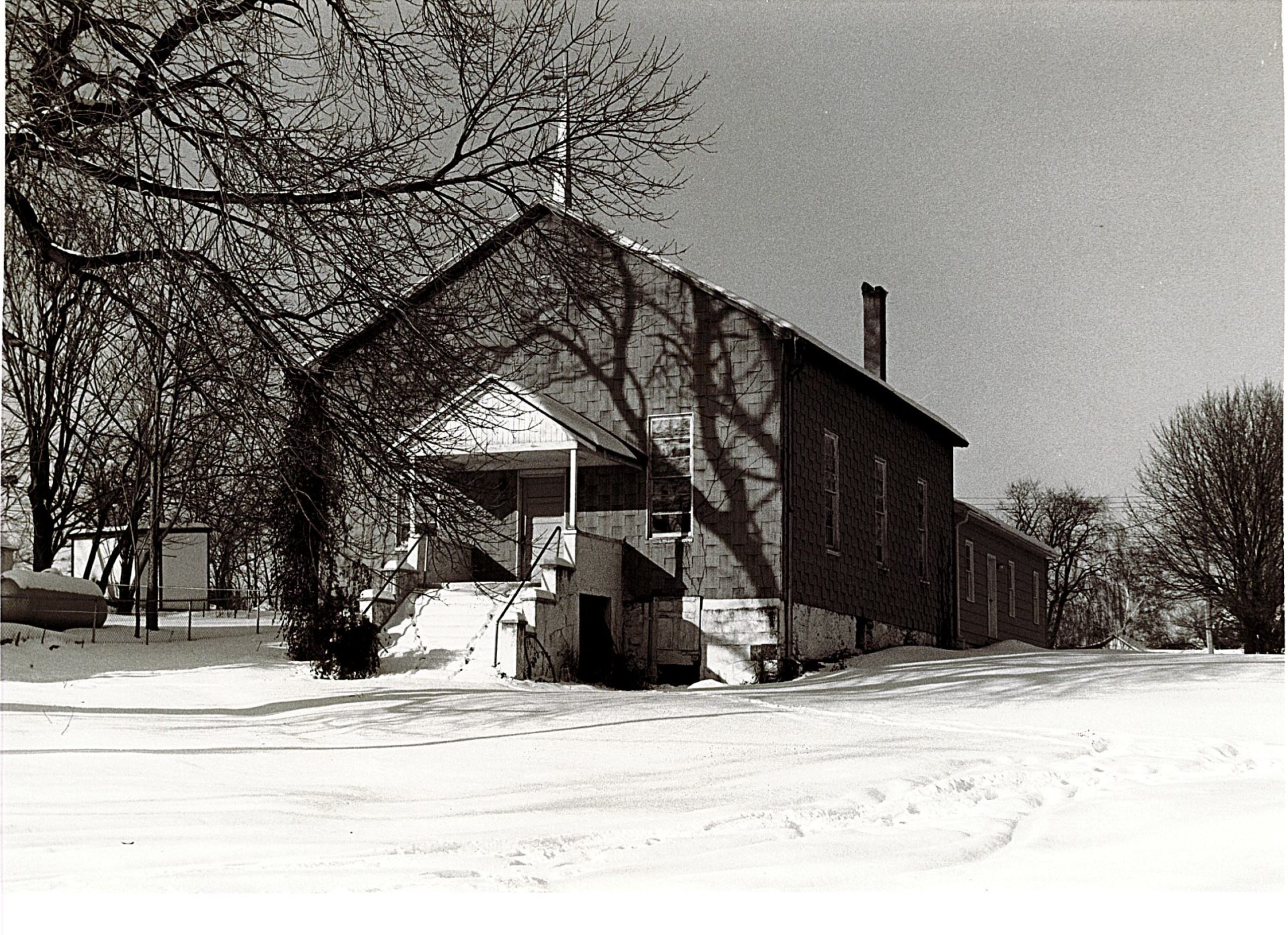 John Wesley Church , 1984, about 7 years after it was sold to a private owner (Corporation of Harpers Ferry archives)
The church served an important role in the community for nearly a century, serving about half the local Black church-going community, with others attending First Zion Baptist Church two doors down or Curtis Memorial Freewill Baptist by Storer College. Delores Jackson Foster, who grew up going to First Zion in the 1940s and 50s, remembers joint bonfire socials between the two churches on Sunday evenings.
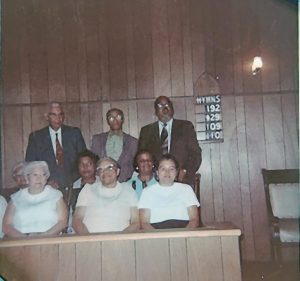
John Wesley senior choir members (front row – Helen Fox, Ophelia Snowden, Madeline Fox. Middle row – Christelle Napper, Inez Spriggs, Victoria Goens. Back row – Bernard Dennis, Madison Briscoe, Oscar Reeler).
The John Wesley Church was known for its outstanding choir, directed for 60 years by James Weaver, before Mr. Reeler succeeded him in the 1960s.
At end of 1972, as demographics were changing, and families were leaving town, the church numbered 34 members. On September 4, 1977, John Wesley Church merged with Camp Hill Methodist to form Camp Hill-Wesley United Methodist Church. The John Wesley Church property was sold to a private owner, and $12,000 of the proceeds went to an endowment for Cedar Hill Cemetery. (The church had purchased a lot on Old Furnace Road in 1869. This land became the nucleus for the cemetery, which was later expanded and served as a final resting place for church members and other black citizens of the community.)
Several mementos of the John Wesley Church were incorporated into the Camp Hill building and are still there, including the pulpit used by Rev. Thomas Snowden and some memorial windows, pews, and pulpit furniture, as well as a painting of the church by Houston D. Snowden.
The John Wesley Church building was unfortunately neglected under private ownership until it suffered from wood rot and termite damage beyond repair. The beautiful little church has become an eyesore and structurally unsound. It is currently being demolished. Fortunately, the owner agreed to donate the cornerstone and colorful slag glass windows to the Harpers Ferry – Bolivar Historic Town Foundation for preservation and inclusion in a history exhibit slated for the completed rehabilitation of First Zion Baptist Church.
In the hearts of those whose earliest memories were formed around the strong community it anchored, John Wesley United Methodist Church will never be forgotten.
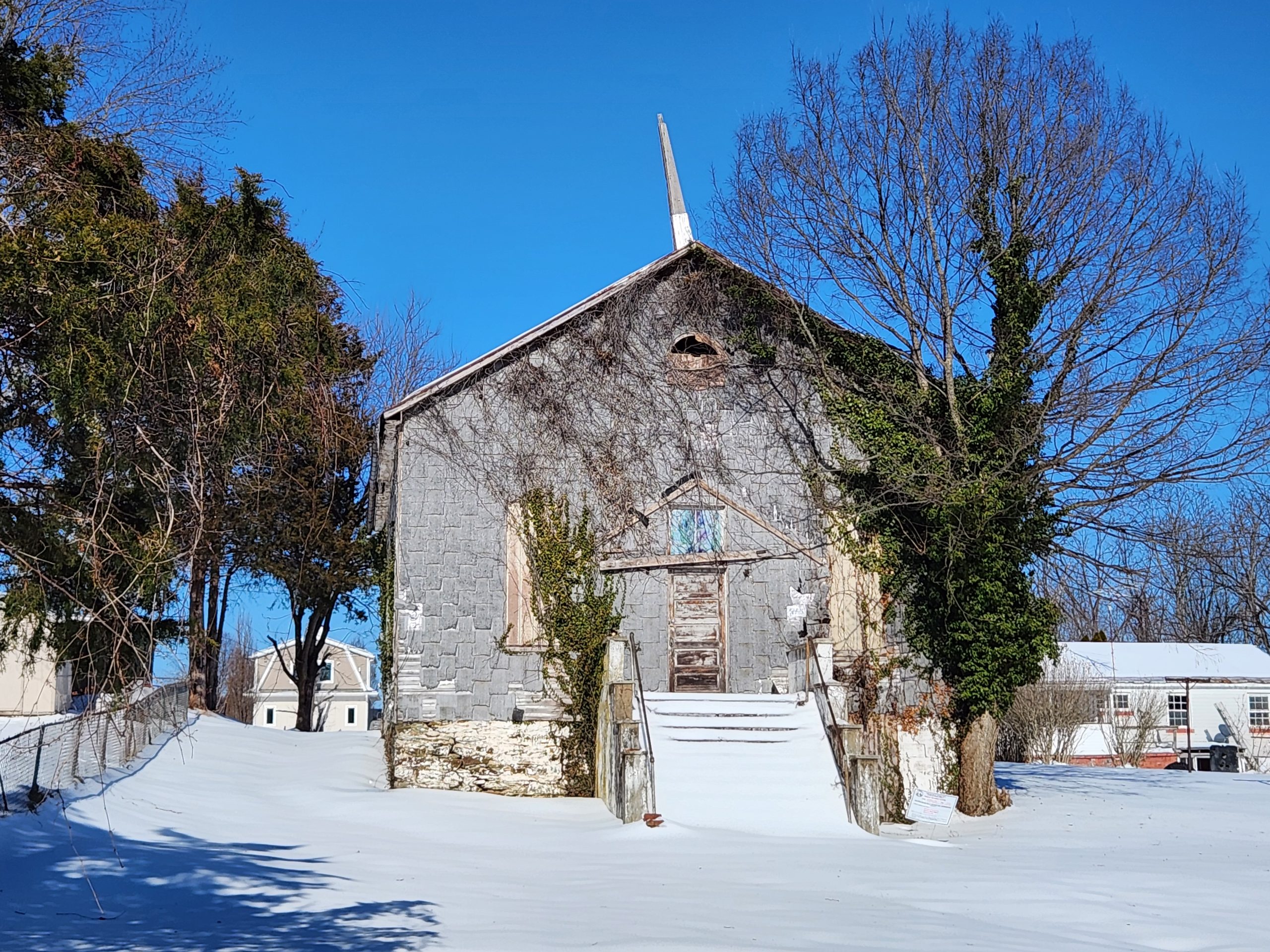 The sad state of John Wesley Church in February 2026 before demolition


